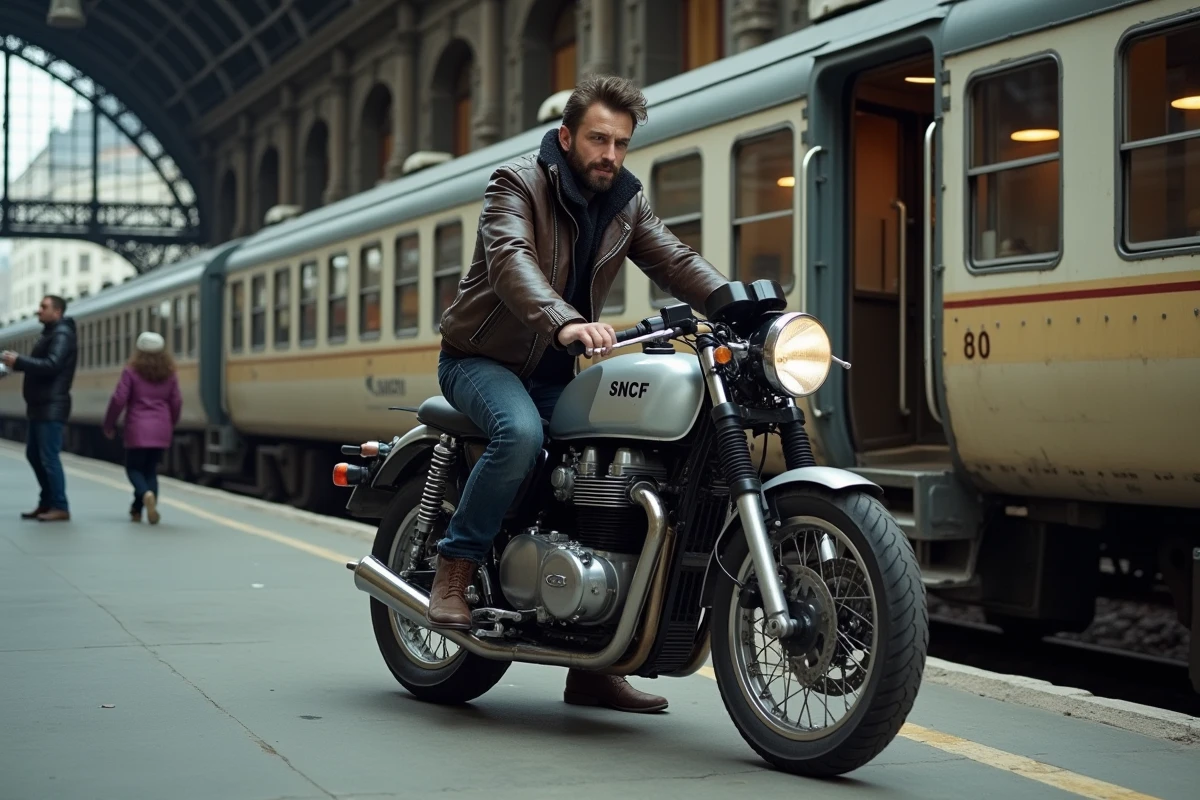
Transporting a motorcycle by train in Europe remains a fragmented process: the SNCF motorcycle train service ceased all operations at the end of 2019, alternatives vary drastically from country to country, and national rail operators do not share the same rules or infrastructures. This guide assesses the real options that remain in 2025-2026 for boarding a motorized two-wheeler on the European rail network.
DB quotas, ÖBB car-carrying wagons, Finnish trains: what each network really accepts
The disparity between European rail operators is the first obstacle. Where the SNCF has eliminated its offering, other networks maintain active services, but with very different conditions.
| Operator | Country | Active motorcycle service | Advance booking | Particularity |
|---|---|---|---|---|
| SNCF | France | No (stopped end of 2019) | – | Outsourced to Hiflow (road transport) |
| DB (Deutsche Bahn) | Germany | Yes (Bicycle & Car) | Recommended 2 months in advance | Quotas full on night lines to Italy |
| ÖBB | Austria | Yes (Railjet car-carrying wagons) | Variable by line | Announcement of March 15, 2025 confirming service maintenance |
| VR (Finnish Railways) | Finland | Yes (Car-carrier trains) | Online at vr.fi | Accepts motorcycles on car-carrying trains |
This table reveals a central point: no single network covers a cross-border motorcycle train route. A French motorcyclist wishing to reach Italy by rail must first transport their machine to Germany or Austria, either by road or via a private carrier.
To delve deeper into motorcycle transport by train with the SNCF and its European alternatives, several feedbacks confirm this fragmentation.
Overcrowding on night lines and booking delays in Germany
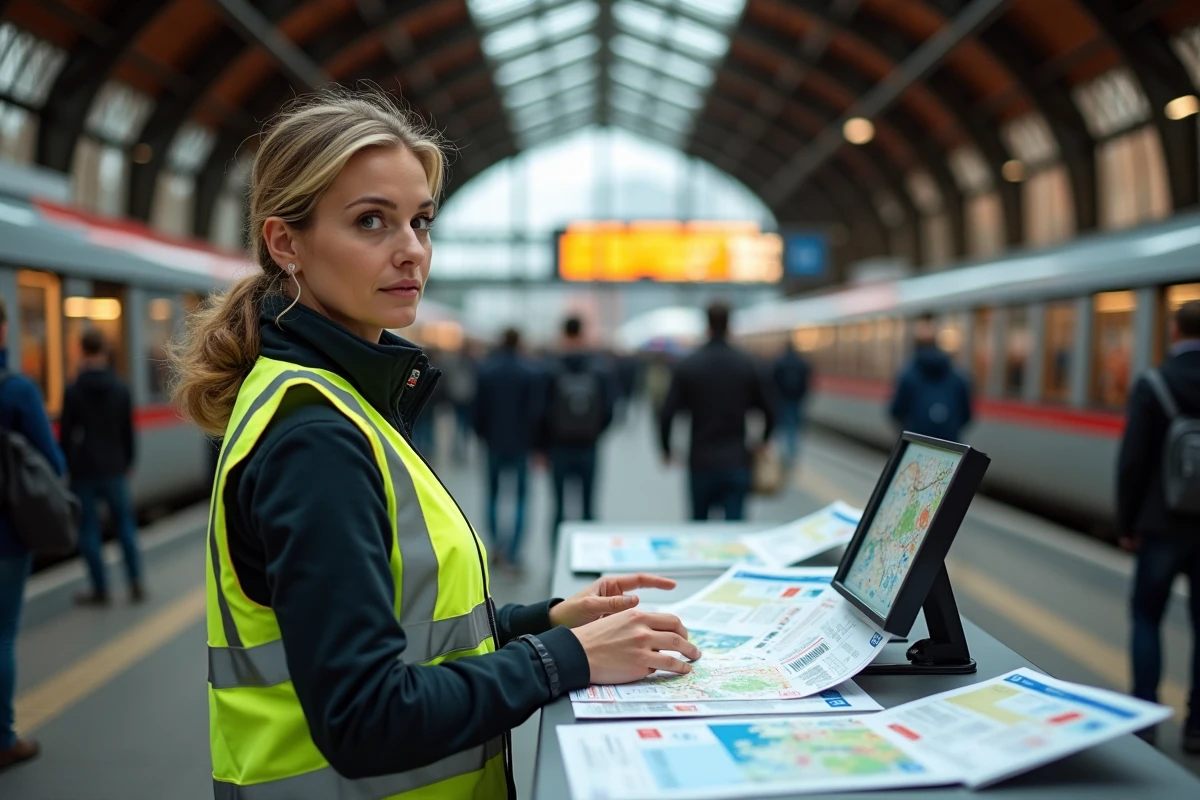
The DB network remains the most used gateway by French motorcyclists to access the European rail network. Night lines connecting Germany to Italy concentrate the bulk of the demand.
Specialized forums report a 30% increase in demand related to post-pandemic motorcycle tourism. This pressure results in frequent cancellations on the DB Fahrrad & Auto quotas, especially during the high summer season.
Direct consequence: available slots fill up very quickly. Feedback converges towards a practical recommendation.
- Book at least two months in advance for Germany-Italy night train routes
- Plan a backup solution (ferry or road carrier) in case quotas are reached
- Check the specific securing conditions for each operator, as they vary between DB and ÖBB
In contrast, Finnish VR lines show significantly higher availability, as the Nordic market is less solicited by long-distance motorcycle tourism.
Motorcycle ferry versus train: a price-flexibility trade-off not to be overlooked
The absence of a unified rail network pushes many motorcyclists towards ferries. Since 2025, operators like Stena Line offer motorcycle-ferry rates comparable to German trains, about half the price charged for a car.
Advantages and limitations of the ferry for motorcyclists
The scheduling flexibility of ferries exceeds that of trains on the France-Germany routes. No restrictive quota, no need to book two months in advance. The motorcyclist boards their machine themselves, which also eliminates the worry related to handling by a third party.
The trade-off is the crossing time. A Stena Line ferry on the North Sea takes several hours, whereas a night train allows for sleeping during the journey. The choice depends on the balance between budget, acceptable duration, and final destination.
No European rail coordination currently exists between ferry operators and rail networks. A combined ferry-train ticket remains a setup that the traveler must assemble on their own.
EU Green Deal 2026 and mandatory quotas: towards a pan-European motorcycle train network
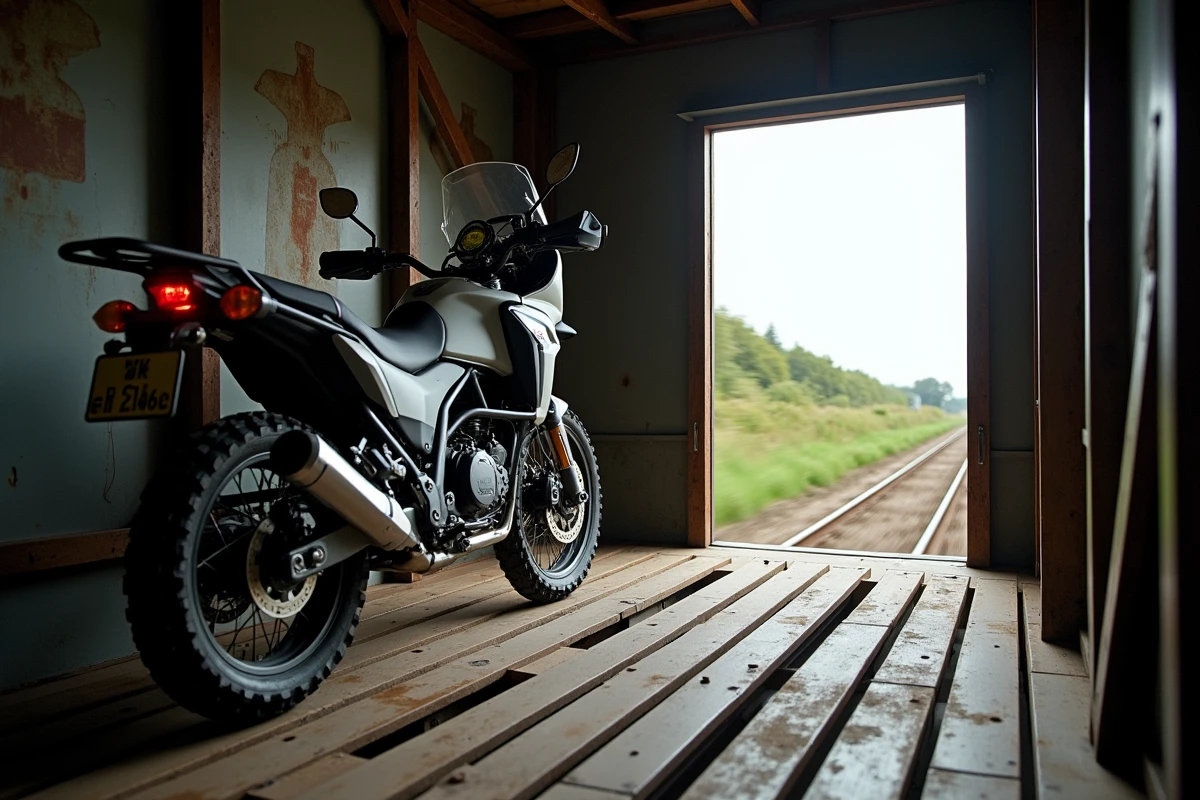
The EU Green Deal standards being prepared for 2026 could change the game. The idea of mandatory quotas imposed on national operators for the transport of light vehicles (including motorcycles) by rail is circulating in regulatory discussions.
What a quota obligation would change
Today, each operator freely decides whether or not to accept motorcycles. The SNCF chose to abandon this in 2019. DB maintains a service under pressure. ÖBB retains its car-carrying wagons.
A mandatory quota would force each national operator to reserve a minimum capacity for motorized two-wheelers on certain lines. This mechanism already exists for bicycles in several European countries.
- France would need to recreate a motorcycle train offering or delegate this obligation to a rail partner
- Cross-border lines would benefit from harmonized boarding rules
- The carbon footprint of motorcycle transport would significantly decrease compared to all-road transport
The climate issue weighs heavily in this matter. Trains emit a fraction of the emissions of an equivalent road trip for a motorized vehicle. The regulatory framework of the Green Deal precisely aims at this type of modal shift.
Nothing guarantees that these quotas will be adopted in this form. The decision depends on ongoing negotiations between the European Commission and national operators. If the system materializes, it would represent the first binding framework for motorcycle transport by rail at the continental level.
The current landscape of motorcycle transport by train in Europe remains fragmented, conditioned by divergent national policies. Motorcyclists wishing to combine rail and two-wheelers must, for now, deal with operators, rates, and availabilities managed country by country, without common coordination.