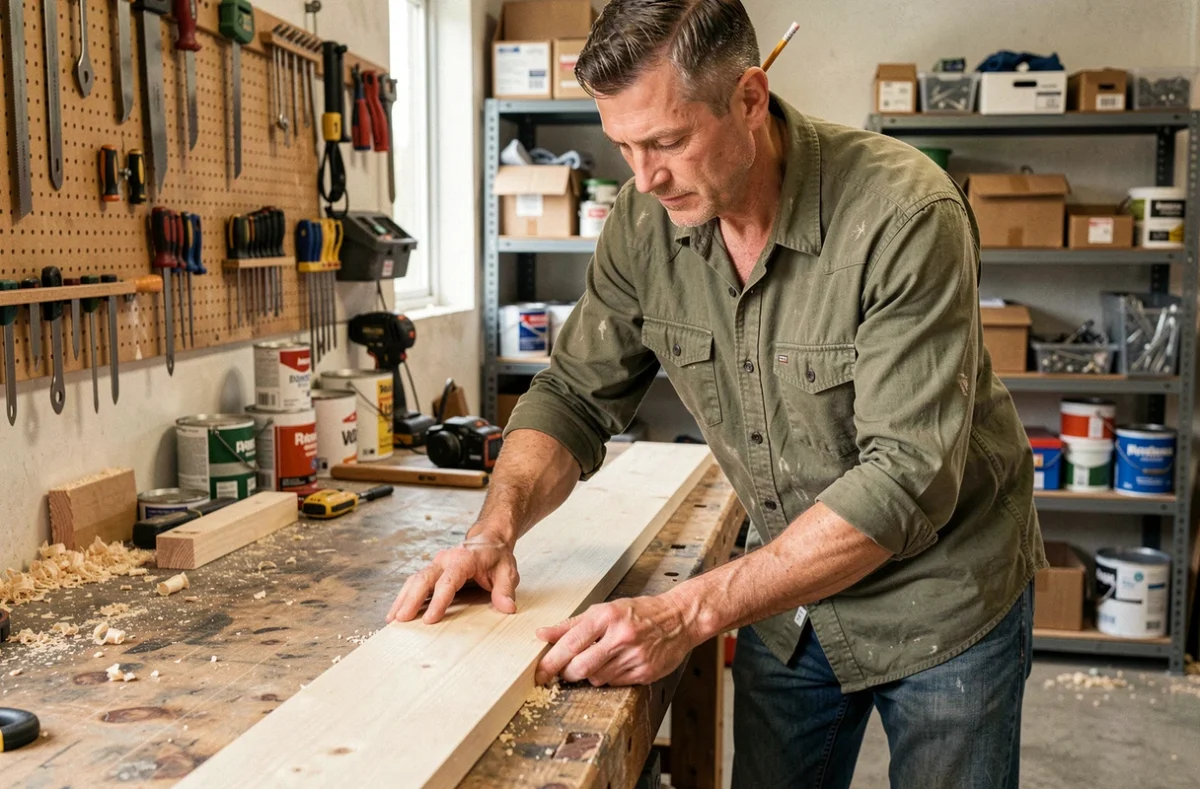
Before starting a DIY project at home, the question that deserves to be asked is not “where to start,” but “what distinguishes a well-executed project from one that is abandoned halfway.” The available data on electrical diagnostics, construction waste sorting, and administrative permits paints a clear picture of the points where DIYers most often stumble.
Electrical Risks and Construction Waste: Two Blind Spots of Home DIY
Competitors talk about tools, planning, and wall decoration. They overlook two realities that determine the success (and legality) of your DIY projects.
The French Federation of Building indicates that 82% of mandatory electrical diagnostics reveal at least one anomaly. Modifications made by individuals often concern kitchens and bathrooms, where the risks of electrocution and fire are highest. Any intervention on an existing circuit (adding an outlet, moving a switch) requires turning off the main circuit breaker and checking for the absence of voltage with a VAT.
On the waste side, since January 1, 2024, the source sorting of construction waste relies on five categories: mineral waste, metals, wood, plaster, and other waste. Even for an individual, failing to anticipate this separation can lead to a refusal at the waste disposal site or additional costs. Planning separate bags or bins from the start of the project avoids sorting a mixed pile at the end.
| Point of Caution | What DIYers Often Do | What Should Be Done |
|---|---|---|
| Electricity | Direct connection without circuit verification | Turn off the circuit breaker, VAT test, respect wet areas |
| Construction Waste | Everything in the same garbage bag | Sort into 5 categories from the start of the project |
| Permits | Work started without verification | Consult the PLU for windows, facade, roofing |
| Load-Bearing Wall | Opening without diagnosis | Involve a structural engineering firm |
This table summarizes the most common gaps between current practices and best practices. Home DIY tips begin with these checks, long before choosing paint or wall coverings.

To delve deeper into these topics and find step-by-step guides tailored to each type of project, the practical sheets available on Conseils Bricolage detail the preparation steps by trade.
Administrative Permits Before Renovation Work: What the PLU Requires
An apparently interior project may require administrative verification. The replacement of windows, a modification of the facade, or an intervention on the roof falls under the local urban planning plan (PLU) of your municipality. Ignoring this step exposes you to a formal notice to restore the situation.
Creating an opening in a wall facing the outside requires a prior declaration of work. In protected areas (historic monument perimeter, classified site), the constraints are even stricter and may include the opinion of the Architect of the Buildings of France.
Before ordering materials for your renovation project, a visit to the town hall or an online consultation of the PLU takes less than an hour and can prevent months of complications.
Load-Bearing Wall or Partition: A Diagnosis That Changes Everything
Tearing down a partition to create an open space is one of the most popular DIY ideas. The problem arises when the partition is actually a load-bearing wall. Any opening in a load-bearing wall requires the intervention of a structural engineering firm, which will size an appropriate lintel or I-beam.
Identifying a load-bearing wall is not limited to “knocking on it to see if it’s hollow.” Thickness, position in the plan, and the presence of supporting beams are all clues, but only a professional can confirm the diagnosis.
Reuse of Materials and Repair: Reducing the DIY Budget Without Sacrificing Quality
The reflex to “buy new” weighs on the budget of any DIY project. The reuse of materials and repair offers a concrete alternative, supported by several recent developments in France.
- Reuse items are becoming more structured: channels are being established to ensure the traceability and quality of second-hand materials (wood, sanitary fixtures, hardware)
- The National Repair Days, organized in several metropolitan areas, allow people to learn how to repair small appliances or furniture rather than replace them
- Resource centers and solidarity stores offer construction materials at reduced prices, often in good condition
Repairing rather than replacing often halves or even reduces the cost of a project by two or three times. A reclaimed solid wood piece, sanded and revarnished, yields a result comparable to new for a fraction of the price. This approach also applies to tools: a repaired drill works just as well as a new one if the motor is sound.
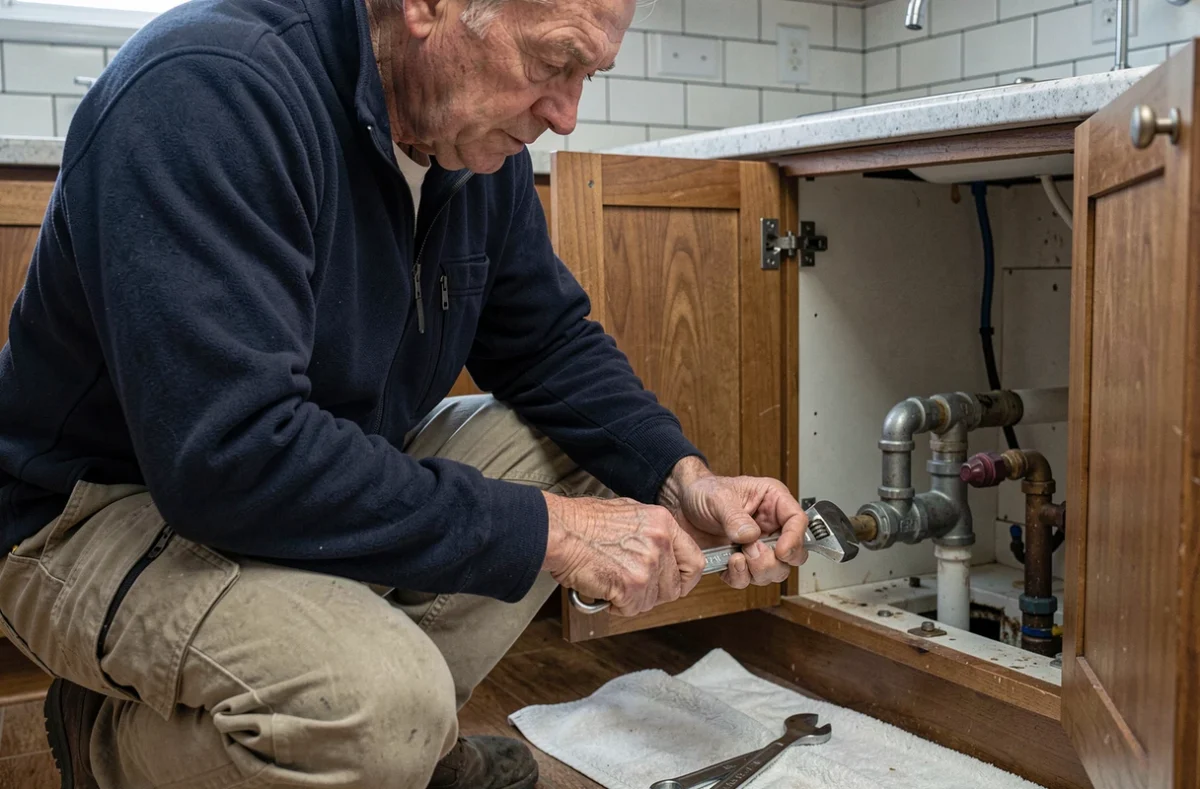
Preparation of the DIY Site: The Steps That Determine the Final Result
The quality of a decoration or renovation project depends more than half on preparation. Sanding a wall before painting, protecting the floors with a thick tarp, applying a primer: these steps are often deemed tedious, yet they determine the durability of the result over time.
- Before painting: fill holes and cracks, sand with fine grit, dust, apply a primer suitable for the substrate (plaster, wood, cement)
- Before laying a floor covering: check flatness with a mason’s rule, level if necessary, allow the material to acclimate to the room temperature
- Before drilling: locate electrical conduits and pipes with a material detector, choose the appropriate drill bit (concrete, wood, metal)
- Before any work at height: a stable and certified step ladder always replaces a chair or stool
Each avoided preparation step pays off at the finishing stage. A poorly sanded wall reveals defects under the paint. A poorly leveled floor causes dips under the floating parquet in the first few months.
Garden and Balcony Layout: Adapting Materials for the Outdoors
Outdoor layout projects (garden, balcony, terrace) are subject to different constraints than indoors. Materials exposed to the elements must be treated or naturally resistant: class 3 minimum wood for a terrace, stainless steel screws to avoid corrosion, microporous exterior paint for woodwork.
A balcony supports a limited load. Before installing heavy planters or a tiled covering, checking the load-bearing capacity with the property manager (in a co-ownership) or a professional remains an underestimated precaution.
The most successful DIY projects are not the most ambitious, but those where preparation, regulatory checks, and material choices were addressed before the first drill hit. A well-prepared project takes less time overall than a project that needs to be redone twice.