Preparing for a getaway involves a series of practical decisions made well before departure. Every choice, from which travel documents to bring to how much time to allow at the airport, directly affects how relaxed you feel during your trip. Stress-free travel isn’t down to luck; it comes from a structured preparation method built around three key areas: paperwork, budgeting and handling the unexpected.
Biometric checks and digital travel formalities
Since October 2025, the European Entry/Exit System (EES) has been recording the biometric data of certain non-EU travelers on short stays at the external borders of the Schengen Area. For those affected, this system has a direct impact on the border-crossing experience.
The first step is to check whether these checks apply to you. The EES applies to third-country nationals: your nationality and residence status determine what steps you need to take. European travelers moving within the Schengen Area are not subject to the same requirements.
A common source of confusion is the difference between the EES and ETIAS travel authorization. ETIAS is a pre-travel authorization for visa-exempt travelers, while the EES is a border registration system. Checking 1001 Découvertes’ travel advice can help you cross-check this information with other specialist resources before putting your documents together.
The gradual rollout of digital checks also means that the border-crossing experience varies depending on the border crossing point and the time of travel. Allowing extra time to cross the border remains the most effective precaution.

Travel budget: keep spending in check without sacrificing spontaneity
Planning your trip finances comes down to a simple distinction between fixed and variable expenses. Fixed costs (transport, accommodation, insurance) are paid before departure. Variable costs (meals, activities, shopping) make up your day-to-day spending allowance.
Setting a daily limit for variable expenses helps prevent your budget from dwindling without you noticing. Work it out by dividing the amount left after fixed costs by the number of days you’ll be away.
- Transport and accommodation: booking in advance lets you lock in your biggest expenses and secure better rates, especially during peak season.
- Travel insurance: check what your bank card already covers before taking out a separate policy, as duplicate coverage is an unnecessary expense.
- Emergency fund: set aside an unallocated amount, representing a portion of your total budget, to cover a change of plans or extra local transport costs.
Keeping a simple record of your daily expenses gives you a clear picture of how much of your budget you’re using. A quick note on your phone is all you need.
Payment methods suited to your destination
Payment habits vary from one destination to another. In some countries, card payments are widely accepted. In others, cash is still the main way to pay, especially at local markets and on public transport.
Bringing two different payment methods (a card and cash, or two cards from different networks) reduces the risk of being unable to pay if one is lost or stops working.
Packing and documents: the one-list method
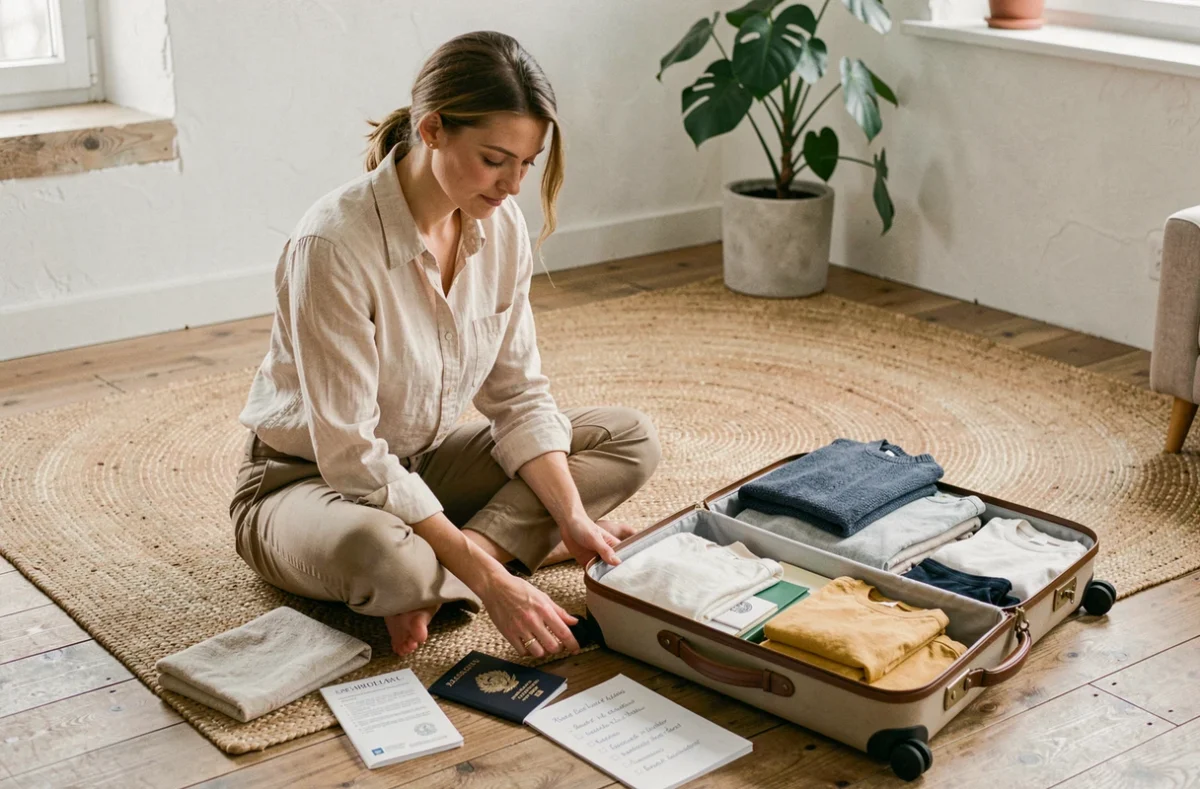
Packing becomes stressful when you leave it until the night before departure and rush through it. The most reliable approach is to create a single list several days in advance, then check off each item as you pack.
Divide the list into two columns: items for checked baggage and items for carry-on. Travel documents, medication and a basic change of clothes should always go in your carry-on, so they’re accessible if your checked bag is delayed or lost.
- A valid passport or national ID card, with a digital copy saved in a folder you can access offline.
- Prescriptions for any ongoing medication, written using the International Nonproprietary Name so they can be understood abroad.
- Accommodation and transport booking confirmations, printed or downloaded for offline access.
- A power adapter that matches the standards of the country you’re visiting.
Every item on your list should serve a specific purpose during your trip. If you can’t think of a situation where you’ll need something, it will only add unnecessary weight to your luggage.

Clothing: the layering rule
Instead of planning a different outfit for every day, choose clothes that can be mixed and matched to reduce the amount you pack. Three tops, two bottoms and a mid-layer will cover most weather conditions on a week-long trip.
Quick-drying fabrics let you wash and rewear an item in less than twenty-four hours, freeing up space for other things.
Handling travel disruptions without losing sight of your trip
A delayed flight, accommodation that doesn’t look like the photos, a canceled activity: unexpected events aren’t exceptions but a normal part of travel. Mentally preparing for them changes how you deal with them.
The first precaution is not to pack every day too full. A schedule with some free time can absorb jet lag or a change of plans without throwing the whole trip into disarray. Two major activities a day is a manageable pace for most travelers.
The second is to have a backup plan for critical parts of your trip. If a transfer depends on just one mode of transport, identifying an alternative before you need it can save valuable time when the moment comes.
Insurance and emergency numbers
Before you leave, write down your travel insurance number and the number of the nearest consulate at your destination. These two contacts cover most critical situations, from medical emergencies to lost documents.
Save these numbers offline, on paper or in an app that doesn’t require an internet connection, so you can access them even in areas without coverage.
Peace of mind while traveling doesn’t come from avoiding problems, but from being able to deal with them quickly. A complete set of documents, a well-planned budget and extra time at every stage provide the foundation for a trip where your attention stays on the destination, not the logistics.