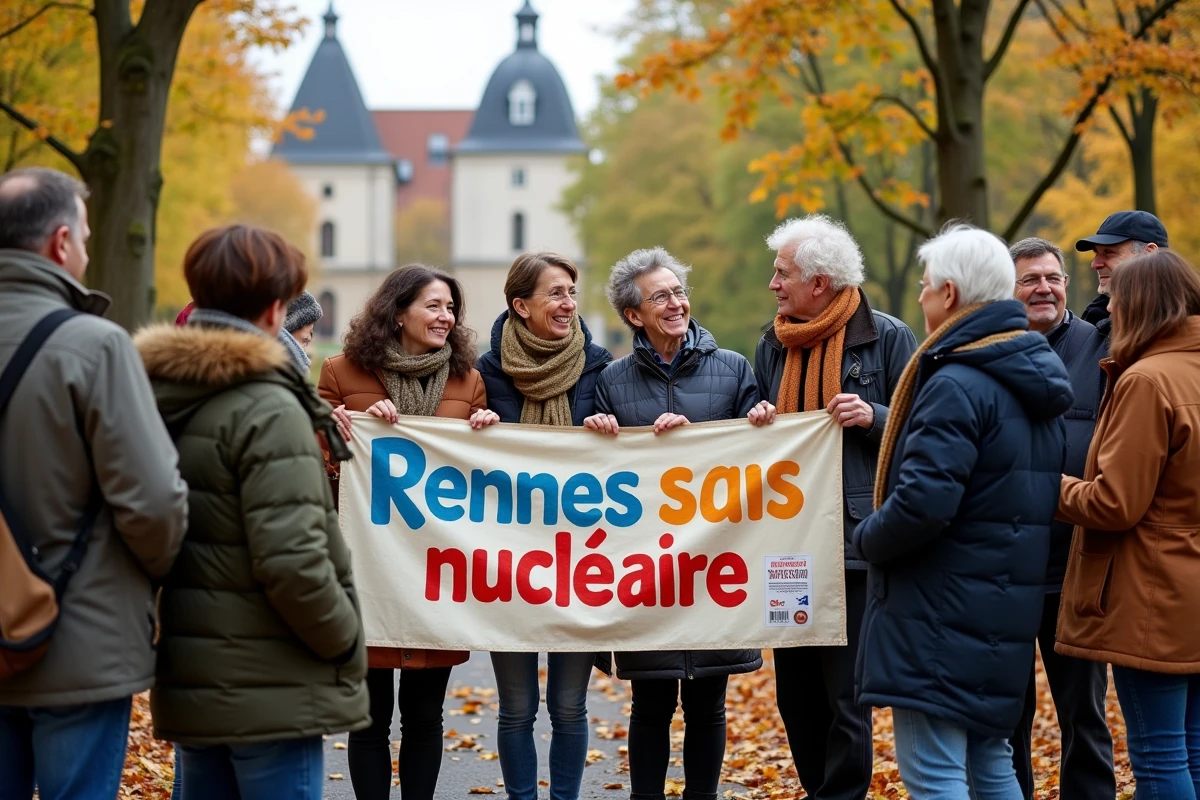
Don’t look for dividends on renewable electricity bills in Rennes: here, there are no shareholders to reward, but a growth that asserts itself every year within local associations and cooperatives. While French nuclear production stagnates, the ranks of members are growing in these citizen structures. The gap widens, with each passing quarter, between a centralized model that is decades old and the rise of initiatives that focus on the collective.
Now, it is citizen networks that invest in solar projects at the neighborhood level, aiming for concrete energy autonomy. Far from the inertia of large groups, these local dynamics rely on the strength of the ground: they know how to quickly gather expertise, funding, and volunteers to accelerate the pace of ecological transition.
Why betting on renewable energies in Rennes changes the game for ecological transition
In Rennes, committing to renewable energies is no longer anecdotal. In the area, this choice is gradually becoming the foundation of ecological transition. Nearby Langouët has already become a pioneer: the municipality has installed a solar power plant coupled with an innovative tracker, financed to the tune of 40,000 euros through a participatory loan. The result: residents do not just observe; they contribute financially, participate in governance, and share the profits. This way of doing things is now infusing the neighborhoods of Rennes.
Long considered fragile in terms of energy, Brittany is overturning predictions and leading the ecological transition. In Grande-Synthe, CO2 emissions have decreased by 30%, renewable electricity purchased reaches 10 GWh/year, and the city has switched to 100% green supply. Behind these figures are real changes: electricity consumption is evolving, and the local carbon footprint is lightening.
There are no shortage of initiatives to encourage energy autonomy:
- Installation of photovoltaic panels on public buildings.
- Launch of citizen power plants and support for biogas.
- Strengthening citizen participation in energy decisions.
Experiences conducted in Sète, Monestier-de-Clermont, or Mouans-Sartoux also prove the effectiveness of policies that combine sustainable development and sobriety. In Rennes, the relay provided by SDN Rennes allows for sharing these actions, facilitating debates, and uniting those who want to accelerate the movement.
Choosing renewable energies is not just about changing technology. It is about paving the way for a new form of energy democracy, where residents, associations, and elected officials learn to decide together and transform the territory from within.
Citizen cooperatives and associations: how local action is organized for a nuclear-free future?
In Rennes, participatory democracy is embodied on the ground, far from formal consultations. Residents engage in cooperatives, particularly SCICs (cooperative societies of collective interest), to carry a common project: to exit nuclear energy and build a sustainable energy transition, hand in hand with local authorities and economic actors.
Langouët launched a participatory citizen loan of 40,000 euros to develop renewable electricity, giving residents a dual role: funders and decision-makers. This direct involvement fosters a social and solidarity economy at the local level, where everyone benefits from the returns.
In Grande-Synthe, the Ecological Transition Cooperative brings together talents and resources to imagine innovative solutions. Ungersheim, for its part, has developed a local currency, the Radis, so that the wealth generated stays local and strengthens residents’ autonomy.
A common point connects these experiences: shared governance accelerates the adoption of sober and resilient solutions. Associations play a key role in disseminating information, organizing popular education, and pooling resources. This alliance between citizens, associations, and cooperatives reshapes the energy landscape, far from the vertical logics of nuclear energy.
Inspiring examples: these Rennes and French initiatives that show the way
In Rennes and its surroundings, there is no shortage of boldness. Elected officials, collectives, and residents are taking the lead to advance the ecological transition at the local level. Thanks to Daniel Cueff, Langouët has risen to the rank of a reference: passive social housing, 100% organic and local cafeteria, pesticide ban, electric vehicles in car-sharing. Residents do not remain spectators: they finance solar production and invest together in clean energy.
Grande-Synthe, in the North, boasts over 56% renewable energies in its total consumption. The ecological transition income is being tested, cafeterias serve meals sourced from organic farming, the largest urban nature reserve in the region is being created, and urban farms bring together food, education, and social justice.
In Alsace, Ungersheim, under the impetus of Jean-Claude Mensch, has established remarkable energy and food autonomy: photovoltaic power plant, organic central kitchen, local currency, and school transport by horse-drawn carriage. This model attracts international figures, from Rob Hopkins to Jacques Dubochet.
Other territories, such as Mouans-Sartoux or Sète, multiply initiatives to sustainably manage water, promote organic farming, renovate public buildings, or create urban micro-forests. Each time, citizen action and collective planning chart the path toward a future free from nuclear energy, well anchored in the expectations and realities of the territory.
A territory that relies on its own strengths resembles a promise: that of energy decided together, sustainably, and of autonomy that does not wait for permission from Paris to move forward.