You certainly know this. There are mostly organic products that must not be exposed to bacteria or microbes during their manufacturing. To ensure the protection of these products, one can use laminar flow hoods. Indeed, hoods create sterile environments where one can handle products without fear of exposing them or oneself to contamination risks. Do you know nothing about what a laminar hood is and how it works? Fortunately, we discuss it in this article.
What is a laminar flow hood?
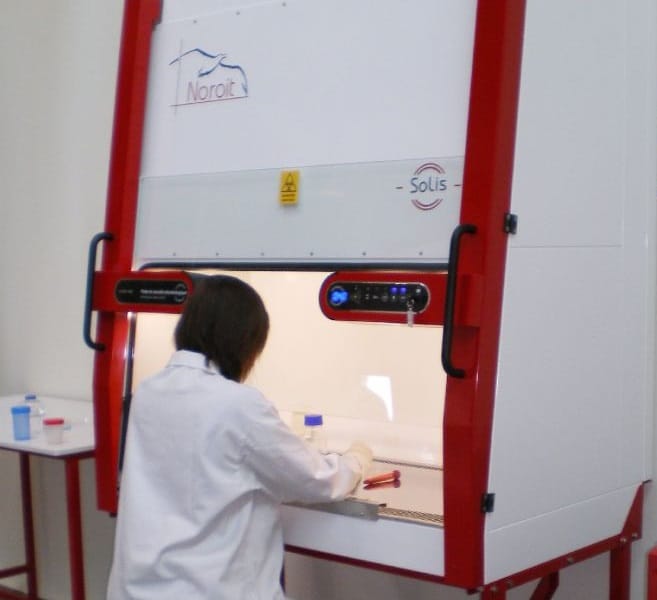
A laminar flow hood is equipment that provides a working environment whose role is to prevent contamination from particles and harmful vapors that come from the products being handled. Thus, when you use this hood, manipulations are carried out in sterile environments and the products have a real protection against potential microbial contamination of biological samples.
Moreover, the laminar flow hood primarily allows for the preparation of culture media and provides the opportunity to inoculate a substrate. Then, this work surface also gives you the possibility to create a spore syringe and perform all manipulations that require a more sterilized space. It is therefore evident that these laminar flow hoods are increasingly used by laboratories, for the most part.
How does a laminar flow hood work?
When you come across very good laminar flow hoods such as the laminar flow hoods made by Noroit, you will see from their operation that they create work surfaces free of all particles. That said, a laminar flow hood directs air through a well-designed and highly effective filtration system, then evacuates this air through the work surface, in a unidirectional airflow.
In other words, the air is drawn in by a turbine, before passing through a HEPA filter, to finally land in the workspace. Thus, this type of incoming air is yeast-free, and bacteria-free or spore-free… It is therefore sterile air. As a result, the airflow, now laminar, purifies the air and prevents particles from attacking your cultures.
Furthermore, most laminar flow hoods are equipped with UV-C lamps, which have a germicidal effect, that sterilize your work surfaces and their contents. These lamps are so powerful that you must turn them off when working under the hood, to avoid being a victim of skin cancer or cataracts.
However, before you start using the hood, you must sterilize your hands and all other instruments, so that your cultures are not contaminated. You should also avoid, as much as possible, storing objects on the work surfaces of your hoods, to promote sterilization effectively.