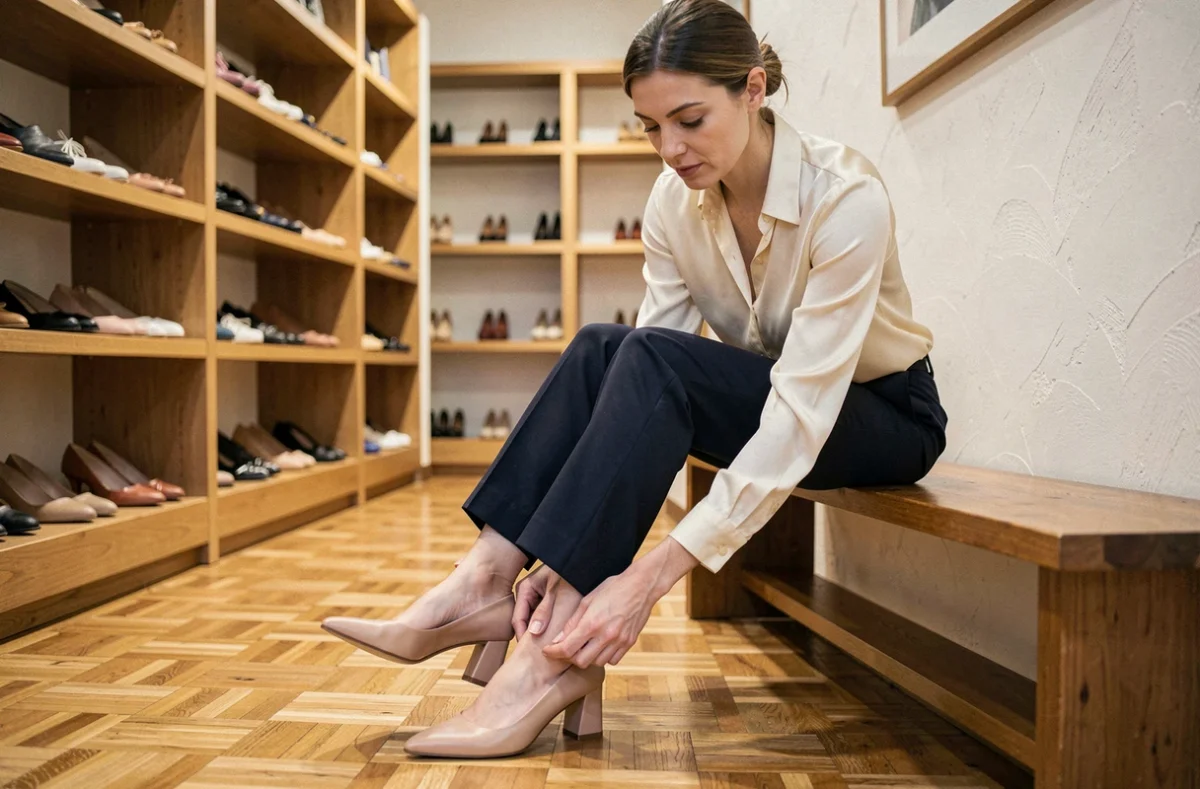
An elegant shoe that hurts after two hours of walking ends up at the back of the closet. The problem isn’t the style, but a mismatch between the shoe’s shape and the foot’s actual anatomy. Length and width matter, as does volume over the top of the foot: these three dimensions determine comfort throughout the day. Understanding what happens inside the shoe makes it easier to choose a pair that lasts without sacrificing style.
Foot volume and instep height: what shoe size doesn’t measure
Shoe size indicates foot length and sometimes width. It says nothing about volume. A high instep can be squeezed in a shoe that’s long and wide enough. The usual response is to go up a size, which makes the heel slip and causes rubbing.
The solution comes down to two practical checks. First, look at the shoe’s interior height over the instep. Then, choose a lace adjustment system (laces, buckles, or hook-and-loop straps) that lets you adjust pressure in this area without changing the length.
Derbies and some strap loafers offer this kind of adjustment. Closed-back slippers and ballet flats without elastic, on the other hand, have a fixed volume. For a foot with a pronounced instep, these styles quickly become uncomfortable, even in soft leather. Brands specializing in dress shoes offer ranges designed with this factor in mind, as you can see at https://www.monsieurteresa.fr, where styles vary to suit different foot shapes.
Foot shape: flat, high-arched, or wide—support makes a difference
Flat, high-arched, and wide feet don’t put pressure on the same areas. Treating them as the same means choosing shoes at random.

- A flat foot needs good heel support and soft cushioning under the arch. A so-called “stability” shoe isn’t automatically necessary if flat feet don’t cause any pain.
- A high-arched foot concentrates pressure on the heel and forefoot. Cushioning should compensate for this uneven distribution, and the front of the shoe should provide enough room to keep the toes from curling up.
- A wide foot needs room in the toe box (the part that surrounds the toes). Forcing a wide foot into a narrow shoe, however elegant, stretches the leather out of shape and creates painful pressure points on the metatarsals.
Before buying, it helps to know your foot shape. A podiatrist can assess it in just a few minutes. This information can then guide every purchase, from Oxfords to smart sneakers.
Trying on shoes: real-world conditions and orthotics
Trying on shoes in a store in the morning, barefoot, doesn’t reflect how you’ll actually wear them. Podiatrists recommend trying shoes on at the end of the day, with the socks you plan to wear with them. Feet naturally swell over the course of the day, and winter shoes worn with thick socks won’t have the same amount of room as they do with thin summer socks.
For people who wear custom foot orthotics (prescription insoles), one technical detail makes all the difference: check whether the insole is removable. If it is, take it out and try the shoe with your orthotic in place. If it’s glued in, the orthotic sits on top and squeezes the foot.
This rules out some styles straight away, but it prevents you from ending up with a pair you can’t wear. Dress shoes with removable insoles are available from several manufacturers, including in formal ranges. Just check before you buy.
Soles and materials: what determines lasting comfort
The outsole and upper materials (the top part of the shoe) directly affect how your feet feel after several hours of wear.
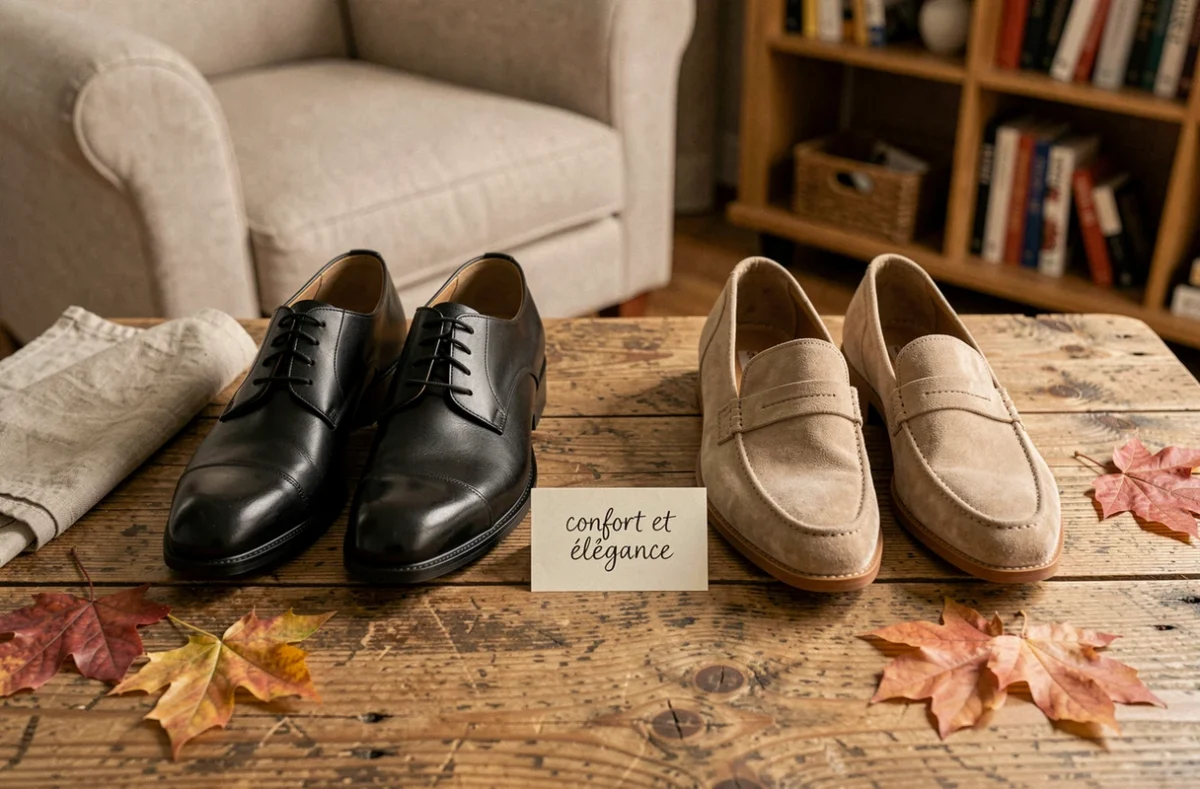
A leather sole is elegant and thin, but offers little shock absorption. On concrete or tile, the impact travels up through the joints. A rubber or crepe sole absorbs more shock while still working with a polished look. Some styles combine a leather outsole with a cushioned mid-layer—a good compromise for everyday wear.
As for the upper, full-grain leather adapts best to the shape of the foot over time. It gives slightly at pressure points without losing its shape. Synthetic materials retain their original stiffness and don’t “mold to your feet.”
Longevity and resoling
Comfort is also something to consider over the long term. A resoleable shoe lasts several years longer than a shoe with an injected sole (bonded directly to the upper). Goodyear, Blake, and Norwegian constructions allow the worn sole to be replaced without affecting the rest of the shoe.
Before buying, check whether a cobbler can resole the style. This helps you avoid buying a new pair every year. It also naturally points you toward better-made shoes, which are often more comfortable from the outset because they use higher-quality materials.
Everyday elegant shoes: choose the right style for the occasion
Comfort and elegance don’t depend on one universal style, but on a few well-chosen pairs.
- For the office or formal meetings, a leather derby or Oxford with a cushioned sole and adjustable lacing works for most situations.
- For long days with lots of walking, a loafer with a rubber sole or a smooth leather sneaker offers a good balance of style and support.
- For semi-formal occasions (dinner, a night out), a Chelsea boot or a block-heeled pump with a heel a few centimeters high supports the foot without constricting it.
The goal is to build a small but versatile shoe wardrobe that suits your actual activities, rather than accumulating styles you wear only once.
Choosing an elegant, comfortable shoe comes down to measurable factors: interior volume, sole type, whether the insole is removable, and whether the shoe can be resoled. Trying shoes in real-world conditions, with your own socks and orthotics, is still the most reliable way to avoid buying the wrong pair.