Choosing audiovisual equipment for your home starts with a question few guides address: will your Internet connection actually support the uses you have in mind? Since January 8, 2025, France has displayed a durability index on televisions, which takes reliability, robustness and repairability into account.
This new indicator changes how you compare screens before buying. But the equipment isn’t everything: the quality of your home network determines your access to streaming, connected services and even some features on newer televisions.
Closure of the copper network and audiovisual equipment: what to check before you buy
Have you noticed that some evenings your streamed film freezes or loses sharpness? This problem could get worse if your household still relies on an ADSL line. The gradual switch from the copper network to fibre-optic broadband affects many French municipalities, and online television services will be directly affected.
Before investing in a 4K television or home cinema system, check which technology is available at your address. If fibre hasn’t yet been deployed on your street, fixed 4G/5G and satellite are alternatives being considered by local authorities to support the transition.
A high-end smart TV loses much of its appeal if your household’s actual connection speed can’t stream high-definition video without interruptions. Take the time to test your current speed and contact your provider to find out the migration schedule for your municipality.
Specialist catalogues such as the one available at dvtelevision.fr let you compare televisions and systems compatible with different types of connection, helping you choose equipment suited to your actual network setup.
Television durability index: look beyond the overall score
Since January 2025, the former repairability index has been replaced by a more comprehensive durability index. It no longer measures only how easy a television is to repair; it also takes its long-term reliability and robustness into account.
In stores and online, you’ll see a score out of 10. This score provides an initial indication, but the DGCCRF reminds consumers that the detailed parameters used to calculate it must be made available to them. In other words, ask for a breakdown of the criteria, not just the final score.
Why does this detail matter? Two televisions with the same overall score can perform very differently in terms of spare-parts availability or screen resistance to power-on cycles. If you plan to keep your screen for more than five years, these sub-criteria matter more than screen size or brand.
Criteria to examine in the index breakdown
- Availability and cost of spare parts (motherboard, backlighting, connectors), which determine whether a repair will be economically viable after the warranty expires
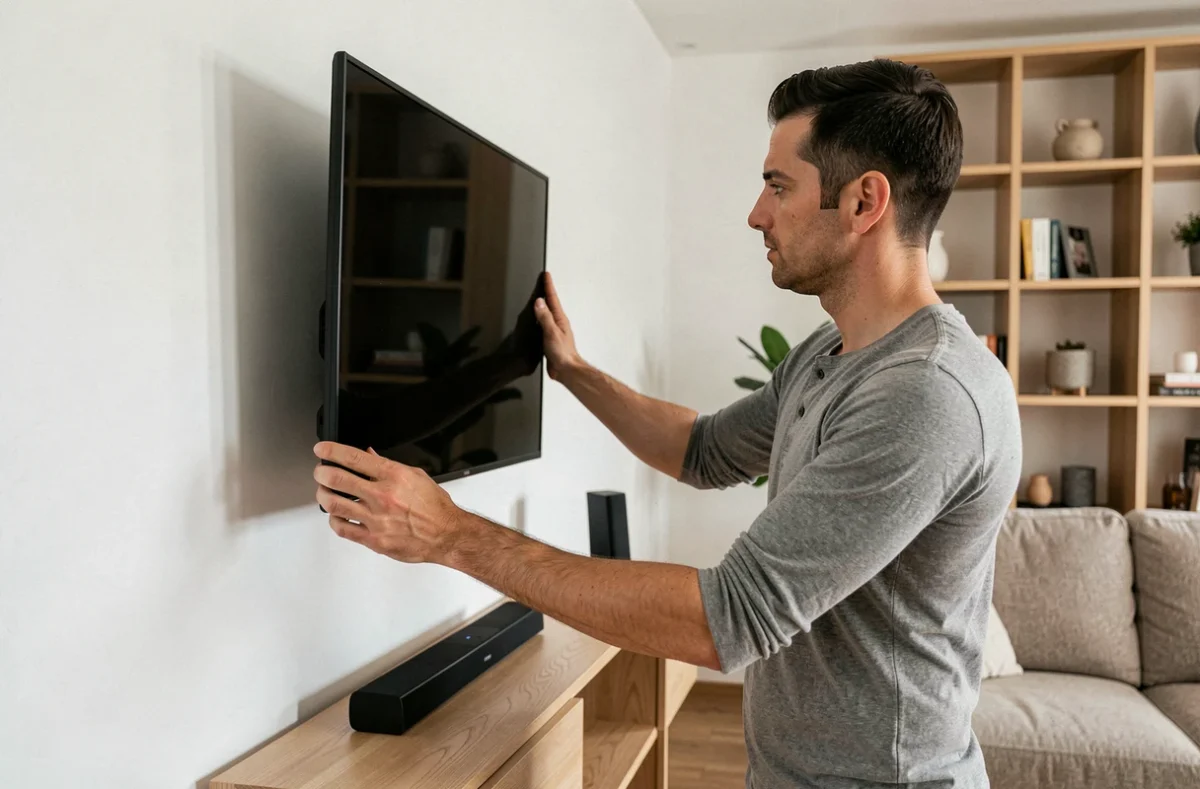
- The mechanical robustness of the screen and chassis, especially for a television mounted on the wall in a busy living room
- The technical documentation the manufacturer provides to independent repairers, an indicator of genuine repairability rather than just theoretical repairability
Sound quality in the living room: why audio deserves as much attention as picture quality
A good television with poor speakers makes for a frustrating experience. Most modern flat screens sacrifice acoustic space to achieve a slimmer design. The result: dialogue that’s hard to hear and virtually no bass.
The most accessible solution is a soundbar, placed beneath the screen to noticeably improve vocal clarity. To go a step further, a system with a separate subwoofer reproduces the low frequencies that the soundbar alone can’t deliver.
A 5.1 or higher audio system remains the go-to choice for a home cinema. It distributes sound across several speakers positioned around the viewer. Installation requires some cabling and careful placement, but the improvement in immersion is considerable.
Choosing an audio system to suit the room
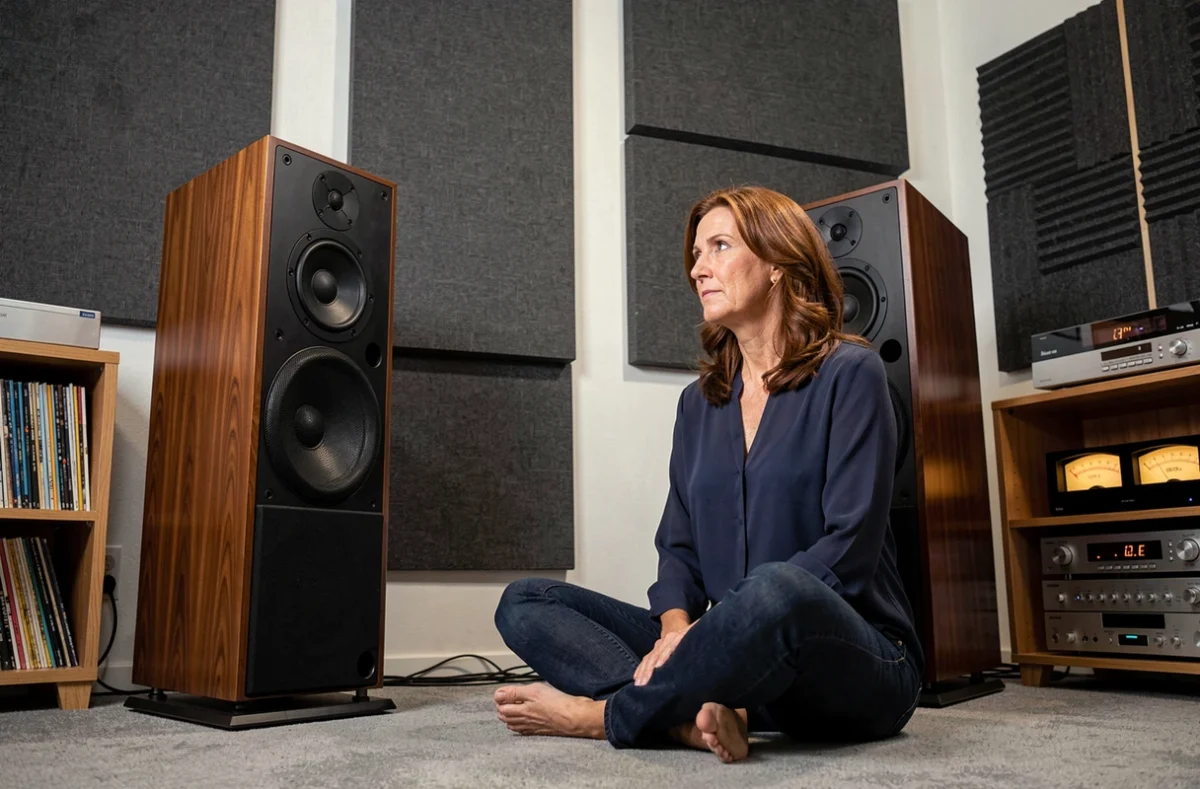
Measure your room before choosing. An open-plan living room connected to a kitchen has different acoustic properties from an enclosed, carpeted room. Glass surfaces and bare walls reflect sound and create unpleasant echoes.
Discreet acoustic panels, a thick rug or even heavy curtains absorb some of the reflections. This basic acoustic treatment costs little, but it improves sound quality more than changing your speakers.
Home audiovisual budget: which expenses to prioritise
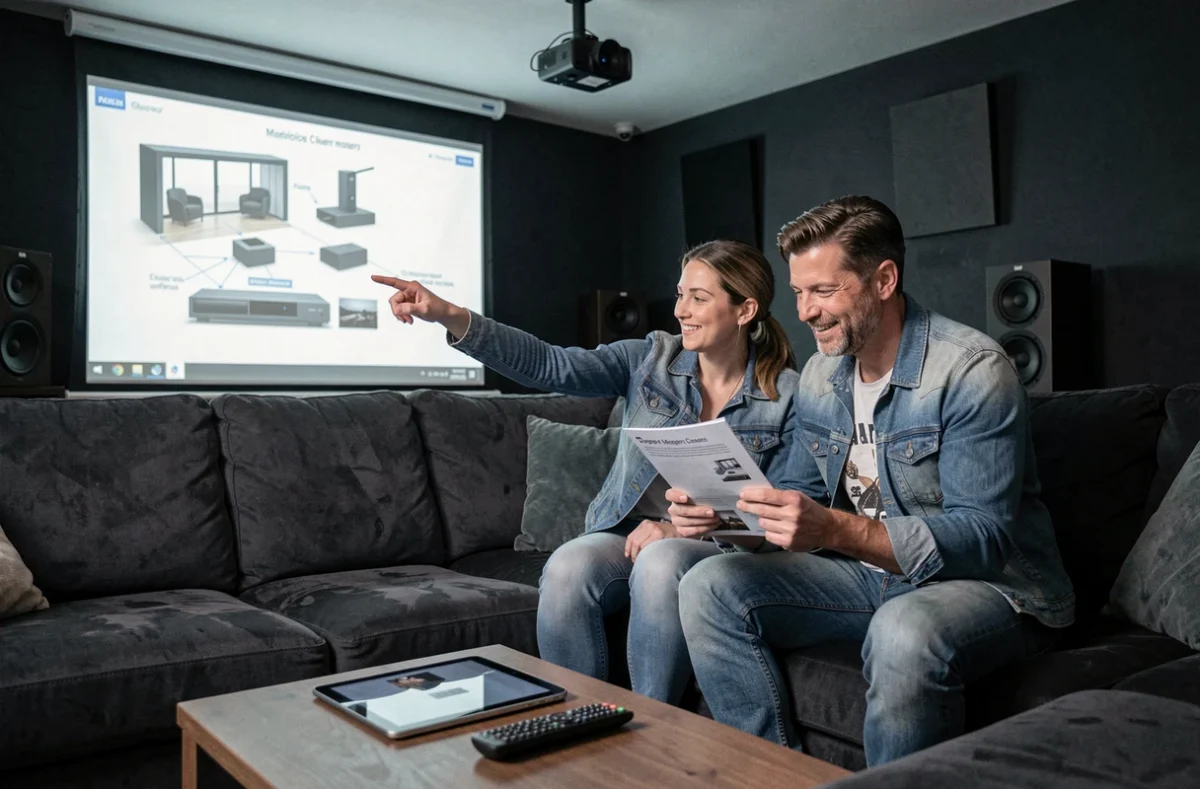
It’s tempting to spend most of your budget on the biggest screen possible. In practice, a more balanced allocation across different components delivers a better overall result.
- Spend around half your total budget on the screen-and-source combination (television or projector, player or streaming box), as this is the foundation of your setup
- Set aside a quarter of your budget for the audio system (soundbar, 5.1 kit or speakers), because poor sound can ruin even the best picture
- Keep the final quarter for cables and connections, mounting hardware, basic acoustic treatment and a possible upgrade to your Internet connection
This allocation isn’t set in stone, but it helps you avoid the classic mistake: a stunning screen connected to inadequate built-in speakers, all powered by a connection that’s too slow for high-definition streaming.
Check your Internet speed and your television’s durability index before finalising your purchase. These two often-overlooked factors have a much greater impact on long-term satisfaction than screen size or the number of speakers. The right audiovisual equipment is equipment that still works properly five years from now, with the connection actually available in your home.