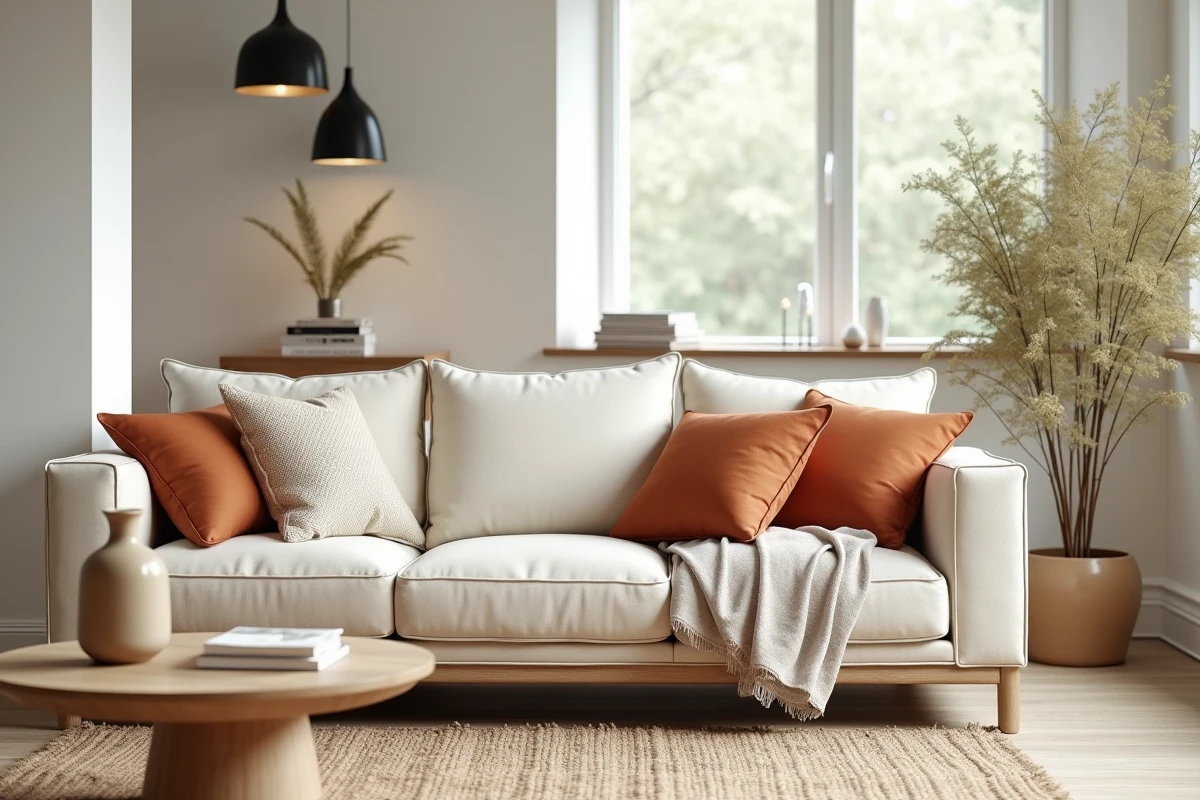
A living room where the light grazes the wall at the end of the day and bounces off a raw finish, a kitchen where you can barely hear the hum of the fridge because the acoustics have been thoughtfully designed: transforming your home into a warm and modern space often comes down to technical details as much as decorative choices. Here, we start from concrete situations, those we encounter when we actually live in the rooms we want to improve.
Acoustics and perceived comfort in a living space
We rarely think about sound when we talk about a warm atmosphere. Yet, it is one of the factors that most transforms the perception of an interior. A highly reverberant room, with a hard floor and smooth walls, can be tiring after a few hours, even if the decor is successful.
Recent guides from ADEME and INRS on comfort in housing confirm that noise pollution significantly degrades the perception of warmth and well-being. In short, a living room can be beautiful and still unpleasant to live in if the sound circulates poorly.
The solutions do not necessarily require major renovations. We can act on several levers to improve the interior layout of your home:
- Thick linen or velvet curtains on large bay windows absorb a significant amount of reverberation while adding a cozy texture to the decor.
- A long-pile or densely woven rug placed under the coffee table or in the sofa area breaks the sound propagation on a wooden or tiled floor.
- Acoustic felt or cork wall panels are now available in decorative formats (geometric shapes, earthy tones) that integrate into a modern style without resembling a recording studio.
The idea is not to turn the living room into an anechoic chamber, but to bring the reverberation to a level where one can converse without raising their voice. It is this comfort that makes a space truly welcoming.
To explore other transformation ideas, you can visit the home page on News 21, which gathers files on decoration and layout in a broad sense.
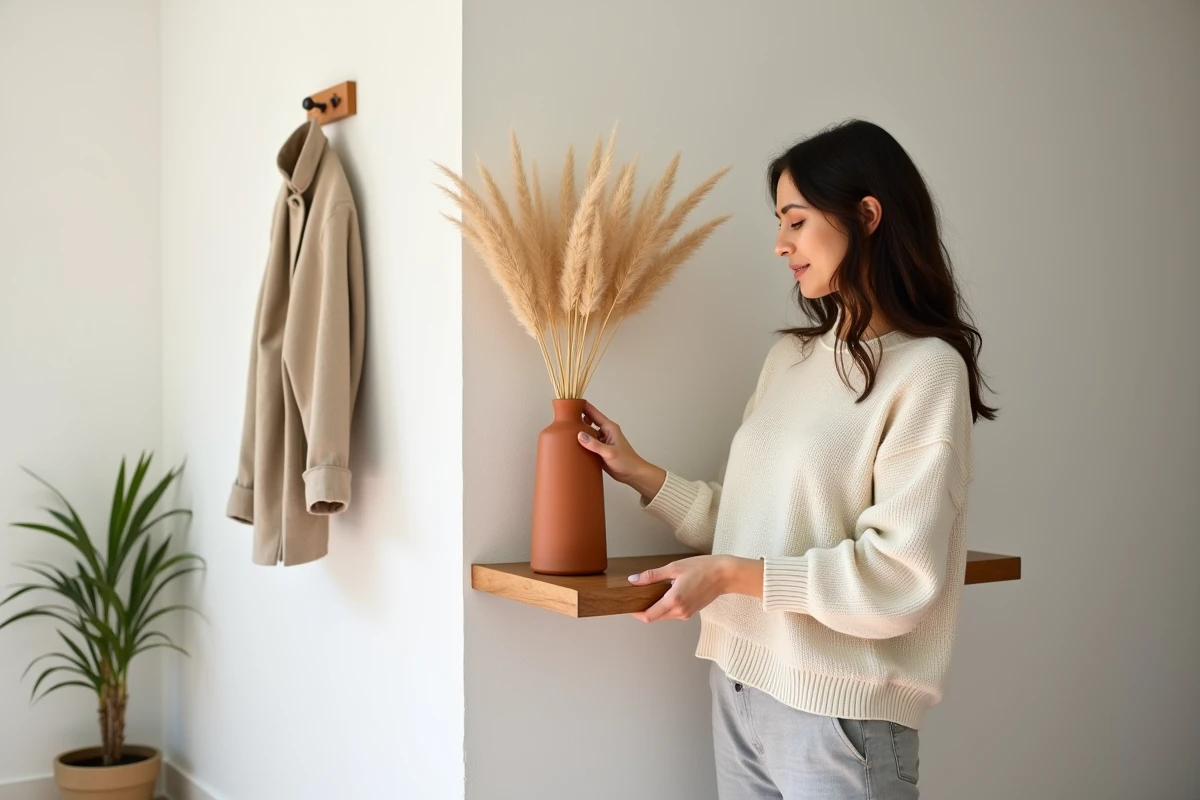
Discreet home automation: lighting and heating controlled without visual overload
Home automation and lighting manufacturers (Somfy, Legrand, Philips Hue) document a clear acceleration in projects where lighting, heating, and sound are controlled by scenarios, but where the equipment remains invisible in the decor. Speakers recessed in the ceiling, minimalist flush switches, LED strips integrated under furniture: technology disappears in favor of ambiance.
Specifically, you set a “evening” scenario that dims the lighting in the living room, turns on warm light in the open kitchen, and lowers the heating by one degree in the bedrooms. Everything is done from an app or a single button placed on the coffee table.
Where to place LED strips without making it look like a showcase
The classic trap is the visible LED strip, stuck under a TV unit, projecting a blue or purple halo on the floor. The result leans more towards a showroom than a cozy space.
You achieve a better effect by integrating the strips into ceiling grooves, under wall shelves, or behind a headboard. The light reflects off the wall or ceiling, never directly into the line of sight. Favoring a color temperature around 2,700 K provides a warm white that resembles candlelight, far from the clinical white of fluorescent lights.
Feedback varies on this point depending on the installation and quality of the strips, but the consensus among lighting professionals remains the same: indirect and warm.
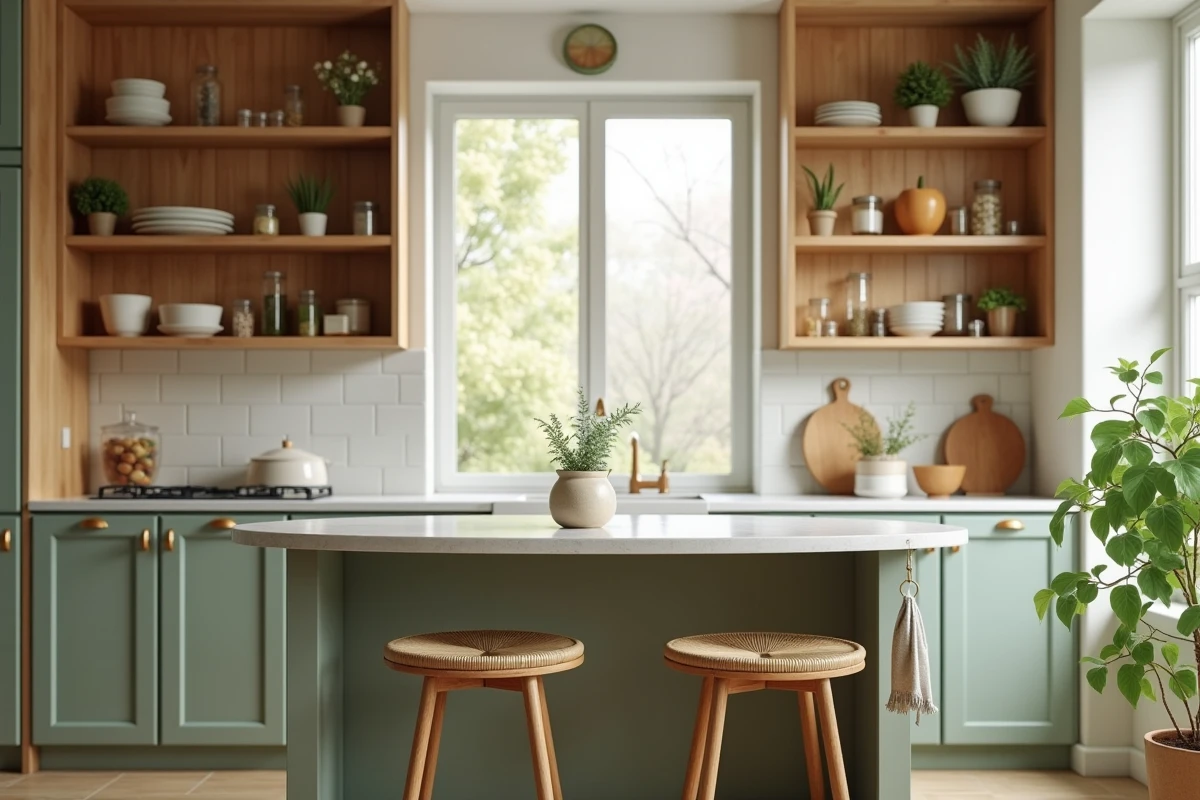
Bio-sourced materials: a warm and low-carbon decor
In recent years, trade shows like Maison&Objet and Architect@Work have highlighted a strong increase in bio-sourced paints, solvent-free reconstituted wood panels, and visible natural insulators (cork, wood fiber) used as visible elements of decoration, no longer just hidden in walls.
Wall cork, for example, serves multiple functions at once. It provides a matte texture and an earthy tone that instantly warms a white wall. It improves sound insulation (we return to acoustics). And it reduces the carbon footprint of the construction compared to a synthetic cladding.
Combining raw wood and contemporary furniture
The risk when accumulating natural materials is tipping into a style that is too rustic. You then lose the modern aspect. Mixing a solid wood countertop with lacquered furniture facades creates a contrast that maintains the balance between warmth and sleek design.
A table top in oiled oak on a black metal base, an ash bench paired with polypropylene chairs with curved lines: these combinations work because they oppose two registers without one overpowering the other. The wood brings warmth, while contemporary furniture adds clarity.
Colors and textiles: working in layers in the living room
Painting a wall in terracotta or sage green is not enough to create a warm atmosphere if the rest of the room remains bare. A more refined result is achieved by working with successive layers of colors and textiles.
- First layer: the wall color, which sets the overall tone. Warm shades (terracotta, ochre, rich beige) work better than cool grays for a cozy living room.
- Second layer: the structuring textiles, namely the sofa, curtains, and rug. Choose materials that are pleasant to the touch (corduroy, washed linen, boucle wool).
- Third layer: movable accessories, cushions, throws, candles, ceramic objects. These are what you change with the seasons to refresh the ambiance without starting over.
A common mistake is to buy everything in the same exact shade. A completely beige living room looks bland. You gain depth by varying the shades within the same color family: a sandy wall, a camel sofa, rust-colored cushions.
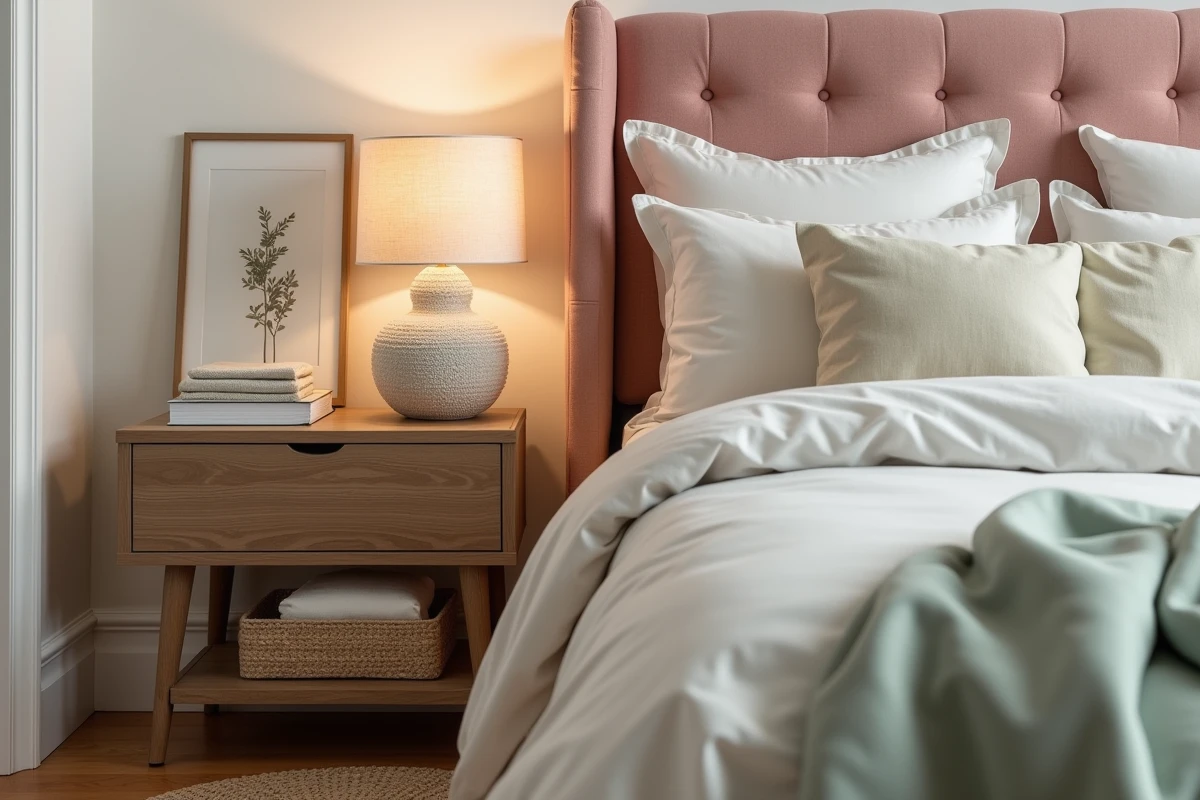
Transforming a house into a space that is both modern and warm relies less on a decor budget than on the coherence of choices. Good acoustic treatment, well-placed indirect lighting, materials that age well, and carefully layered textiles produce a result that no isolated piece of furniture, no matter how stylish, can offer alone.