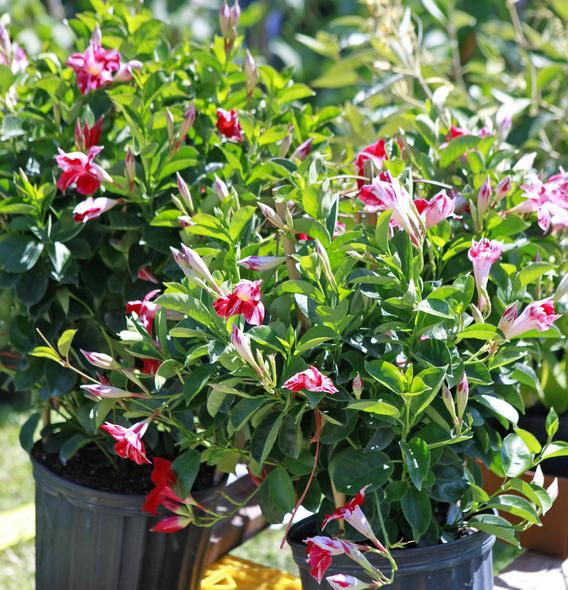
Very robust and flowering, dipladenia has become one of the stars of summer flowers for very sunny spots. However, this beautiful climbing plant with glossy foliage does not withstand frost. Here are some tips to keep it through the winter and for many years to come.
Long before the first frosts arrive, it would be ideal to place your dipladenia in a moderately heated greenhouse or conservatory. This vine thrives in a very bright, even sunny, location. A lack of light slows or halts its blooming, causing its shoots to elongate with long internodes between the leaves. Even though it is not a succulent plant, it benefits from light exposures like cacti.
But for those who do not have such winter gardens where exotic plants thrive wonderfully, a sunny room in an apartment or house works very well. The pot should be placed as close as possible to a bay window, especially if the sun does not flood the room. A balcony or terrace plant, dipladenia easily becomes a good houseplant when the exposure suits it.
Regardless of the sheltered spot chosen for wintering, be careful not to overwater your dipladenia. Sensitive to excess moisture, it only requires watering when the surface of the substrate in the pot is well dry. Avoid stagnant water in the saucer or pot. Quite resistant to the dry air of our heated interiors in winter, this climbing plant benefits from a few sprays of soft, non-limestone water on and under the leaves. Be careful, no tap water, otherwise the beautiful bright green leaves will stain with white marks due to the limestone deposits after the evaporation of the fine water droplets. Let your plant grow gently during the bad season without adding any fertilizer. You will feed it when spring returns with a fertilizer for tomatoes or geraniums. If it likes the room where you have placed it, it will emit new shoots that will wrap around a stake or trellis. You can also let them cascade down.
With winter over, you can take the dipladenia outside, gradually acclimatizing it to the sun. After a few weeks in the fresh air, it should be able to handle it without any problems.
Tag : know all about dipladenia