In France, free time varies considerably from one person to another. Available data on the subject remain patchy: the most frequently cited Insee time-use survey dates from 2009–2010, limiting the relevance of current numerical findings.
A WHO Europe report links cultural participation (creative activities, live performances, heritage visits) to greater life satisfaction and fewer depressive symptoms, while noting that no single activity is guaranteed to suit everyone. Choosing fulfilling leisure activities therefore means weighing several personal factors before getting started.
Stress-relieving hobbies: the trap of disguised obligations
Taking up a hobby to unwind can have the opposite effect if it comes with a rigid schedule, recurring costs or pressure to improve. A group class at a fixed time, a non-flexible monthly subscription or a hobby requiring expensive equipment can add mental strain when you were looking for relief.
Three criteria can help you assess this risk before committing:
- Scheduling flexibility: can you do the activity at different times, without a penalty for missing a session?
- The true upfront cost: beyond the sign-up fee, will you need to budget for equipment, travel or specific clothing?
- No pressure to perform: will you still enjoy the hobby if you don’t make rapid progress or skip a week?
A hobby that meets all three criteria is more likely to stick. Flexible activities (walking, drawing, reading, gardening) are better suited to the ups and downs of a busy schedule than those that require a fixed commitment. To explore a range of ideas, the leisure activities featured on La femme s’entête are grouped by interest, making it easier to find options that fit your circumstances.

Creative activities and mental well-being: what research shows
WHO Europe has compiled data linking cultural participation to positive health indicators. The findings cover a broad range of activities: taking part in a creative pursuit, attending a live performance or visiting a heritage site. According to this review, cultural participation supports health beyond simply helping people relax, although its effects vary from person to person.
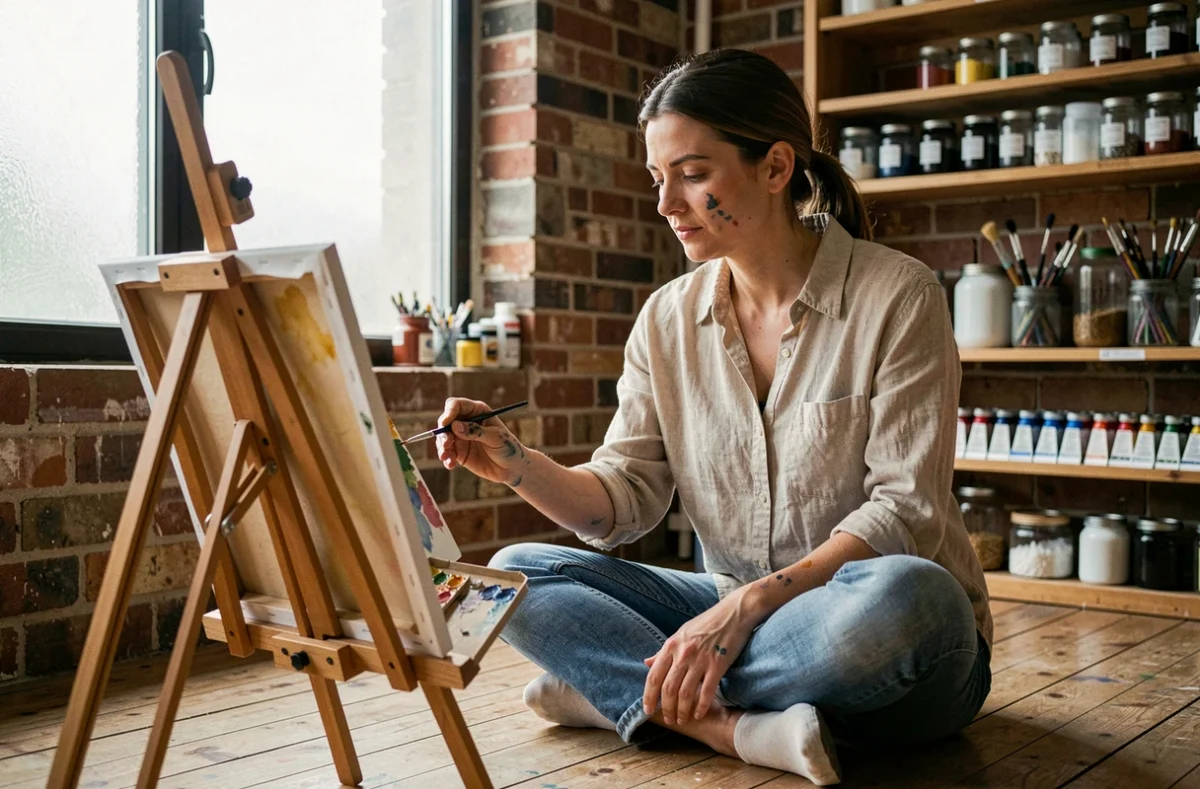
A qualitative study of a ten-week group arts programme supports this perspective. Participants reported feeling surprised, becoming absorbed in the activity and experiencing renewed vitality. The novelty of an activity matters as much as its relaxing nature. Trying something unfamiliar (pottery, watercolour painting, writing) can break the cognitive patterns associated with everyday stress.
These findings do not mean that every creative activity is right for everyone. The study focused on a specific, facilitated programme and does not prove a universal effect. Taking up a creative hobby makes sense when it reflects genuine curiosity, not when it is driven by pressure to pursue well-being.
Dance, movement and physical leisure activities: a promising avenue, but not a cure
A 2024 meta-analysis published in The BMJ compared several forms of exercise in trials involving depression. Dance showed positive results, probably because it combines movement, music and social interaction in one setting.
The authors of the meta-analysis point to a clear limitation: there are still relatively few studies specifically on dance. Presenting dance as an alternative treatment would be an overstatement. It is an appealing leisure option for people drawn to group movement, but not a substitute for care when someone has a diagnosed condition.
This applies to physical leisure activities more broadly. Running, swimming and yoga have documented benefits for perceived stress, but these depend on regular practice and enjoyment. A physical hobby pursued out of obligation loses its protective effect. The key question remains the same: do you feel like doing this activity again next week?

Choosing a hobby that fits your daily life: a practical decision-making guide
Rather than searching for the perfect hobby, it is more realistic to start with your actual constraints. The time you have available, your budget and your energy at the end of the day are more reliable filters than lists of recommended activities.
- Less than two hours of free time a week: choose small activities that fit into your routine (listening to podcasts, sketching for ten minutes, reading before bed or walking part of your commute).
- Limited budget: libraries, community workshops and nature outings only require travel. Cost is not proportional to the benefits you feel.
- Chronic fatigue: passive leisure activities such as listening to music or visiting cultural sites are often overlooked. They require no effort to produce anything and are still associated with greater life satisfaction in WHO Europe data.
- Looking for social connection: a group activity (choir, cooking class, dance) adds a social dimension that solo pursuits cannot provide.
This guide is not intended to be exhaustive. It is designed to rule out options that would add stress rather than relieve it. The best hobby is one you do regularly without having to force yourself.
When there really is no time for leisure
Access to leisure depends on structural factors that well-being guides rarely mention. The most frequently cited French data on the free time of employed women come from the 2009–2010 Insee survey, making any current generalisation uncertain. Studies on the effects of leisure on mental health mostly focus on older people, and their findings cannot automatically be applied to overworked employees or single parents.
Recognising this limitation changes how we frame the question. Choosing a fulfilling hobby is not just about making the right personal choice; it also depends on material circumstances. When time is short, doing an activity for less time is better than giving it up altogether. Ten minutes of drawing or a short walk can still have a positive effect on perceived stress, even though evidence for these shorter formats remains limited.